The American Law Institute’s annual Accountants’ Liability conference was held on May 14 and 15, 2026, in Washington, D.C. The conference, now in its 36th year, was co-hosted by Junaid A. Zubairi, Chair of Vedder’s Government Investigations and White Collar Defense group, and Veronica Callahan of Arnold & Porter LLP. The conference featured a wide variety of speakers, including regulators from the Securities and Exchange Commission (“SEC”) and the Public Company Accounting Oversight Board (“PCAOB”), in-house counsel, outside counsel, and consultants. The conference included panel discussions addressing current SEC and PCAOB initiatives, priorities, and enforcement trends for the year ahead. The conference speakers and panels also provided an update on litigation, regulatory, and practice developments in the accounting industry.
The conference included keynote remarks from Acting Chief Counsel Shehzad (Shah) Niazi and Deputy Chief Accountant Michal Dusza from the SEC’s Office of the Chief Accountant (OCA), as well as George Botic, a PCAOB Board Member.
Highlights from this year’s conference included extensive discussion of the policy priorities of the SEC and PCAOB, including a continued focus on (1) combatting investor harm; (2) auditor independence; (3) the use and rise of new tools and technology in the accounting industry; and (4) ways to identify, manage, and mitigate accounting-based risks.
Keynote Panel with the SEC’s Office of Chief Accountant Staff
The conference kicked off with a panel discussion with Acting Chief Counsel Niazi and Deputy Chief Accountant Dusza from the OCA, moderated by Vedder attorney Junaid A. Zubairi. Mr. Niazi and Mr. Dusza spoke about SEC enforcement trends related to accounting and auditing issues, auditor independence, and other OCA priorities. Mr. Niazi and Mr. Dusza echoed the SEC’s recent messaging regarding a “return to core principles,” with a focus on protecting investors through accurate and independent financial audits and an increased emphasis on individual liability for misconduct. Mr. Niazi and Mr. Dusza discussed the importance of auditor independence, with Mr. Dusza recommending that auditors keep in mind the “dynamic environment” affecting financial disclosures. Mr. Dusza explained that new technology, geopolitical issues, and economic trends should not be disregarded when reaching audit opinions. He also noted that quality control and individual accountability, specifically for gatekeepers like auditing firms, are “two core pillars” of current SEC enforcement. Mr. Niazi shared that individual accountability is a focus aimed at general deterrence, with the ultimate goal of protecting investors.
Mr. Niazi and Mr. Dusza shared that key topics emerging during SEC consultations include risks and issues arising from private equity investments in accounting firms, partner rotation requirements for auditing firms, and the use and implementation of artificial intelligence (AI) in accounting tools and business relationships. Mr. Niazi confirmed the creation of a new SOX Group within the Division of Enforcement, which will address accounting and auditing matters, but stated he could not share much else at this time. Mr. Niazi discussed optimism about SEC staffing, especially given that the new Director of Enforcement, David Woodcock, is a former practicing CPA who understands the importance of auditing and accounting issues. Mr. Niazi further discussed the SEC’s coordination with the PCAOB to improve efficiency and transparency between the agencies.
Keynote with PCAOB Board Member George Botic
PCAOB Board Member Botic delivered a keynote address on day two of the conference. Board Member Botic began his address by emphasizing that auditors served the broader public interest, including helping to maintain the trust and confidence necessary for healthy capital markets and the greater financial ecosystem.
Board Member Botic noted that the PCAOB’s current strategic plan is designed to run through 2026, and he stated that the PCAOB is working on developing a new plan to cover the next five years. Throughout his discussion, Board Member Botic expressed an interest in receiving public comment on the plan, proposed rules related to standard setting (including Critical Audit Matters and the use of service organizations), and the general state of the profession. Regarding PCAOB’s largest budget reduction in history, Board Member Botic commented that people are both the PCAOB’s biggest expense and also its most important asset.
Board Member Botic identified two primary benefits of the PCAOB’s inspections of audit files—first, they provide insights into firm systems’ quality control (QC), which Board Member Botic views as foundational to high quality audits, and second, they confirm the engagement team’s ability to execute at the standard that firm system’s QC is designed to maintain (i.e., audit quality improves as a result of an engagement team’s awareness that their audit might actually be inspected). According to Board Member Botic, firms with better QC systems were better positioned to withstand “shocks to the system,” such as the Covid pandemic.
Board Member Botic addressed PCAOB initiative QC 1000 (“A Firm’s System of Quality Control”), scheduled to take effect later this year, and he stated that PCAOB inspections are shifting toward reviewing firms’ systems of QC. Board Member Botic observed that certain firms have noted complexities in QC 1000’s implementation, and he noted that the PCAOB will be issuing a supplemental request for comment this year. Board Member Botic said that he expects QC 1000 will give inspectors greater insight into how a firm assesses risks and culture, but cautioned that the inspection process is complex, and that there is a risk of moving too quickly. Board Member Botic also announced that the PCAOB’s goal is to form a task force on QC 1000, stating that information is expected to be provided in the coming weeks.
Regarding the SEC Division of Enforcement’s upcoming new SOX group, Board Member Botic largely deferred to Acting Chief Counsel Niazi’s and Deputy Chief Accountant Dusza’s comments during the prior day of the conference. Board Member Botic commented that, while the PCAOB has served a vital role in this space over the past two decades, it has always worked cooperatively with the SEC and looks forward to continuing to serve complimentary functions in the future.
Board Member Botic identified inspections for broker-dealer auditors as another area of PCAOB focus. Although the PCAOB previously deferred its decision on whether to exempt broker-dealer auditors from inspection, Board Member Botic noted that the PCAOB expects to adopt a permanent inspection program, ideally this year, following rulemaking and coordination with the SEC. According to Board Member Botic, the biggest question is whether there should be an exemption for non-carrying broker dealers, which would impact both inspection and registration.
Board Member Botic also addressed private equity investments in accounting firms. Benefits of such investments identified by Board Member Botic included facilitating succession planning, attracting and retaining talent, investments in technology and AI, and transformation (including rollups, acquisitions, and provision of higher quality services). However, Board Member Botic acknowledged certain downsides, including potential independence issues, changing incentives, and the shifting of resources to the non-attest entity. He noted that there is also a tension between profitability and the public interest, as well as potential impacts on competition. Board Member Botic questioned how private equity might exit this type of investment, and noted that there have been a few instances where an audit firm became a public company through an initial public offering (IPO).
Looking ahead to the next five years, Board Member Botic emphasized the unique nature of the audit profession, in that the ultimate end users of the work product could be anyone, and not just the client. Board Member Botic noted the rapid development of AI and the speed at which the profession will continue to evolve. He credited the PCAOB’s collegiality and level of dialogue with each other, various stakeholders, and the public, as one of the ways in which the PCAOB keeps its processes up to date and effective.
Board Member Botic closed his remarks with a quote from former SEC Chairman Arthur Levitt, Jr., imploring all to “never lose sight that the fundamental work of the financial statement auditor is to be the ‘guardian of the truth.’”[1]
Other Remarks
In addition to the keynote remarks by Acting Chief Counsel Niazi, Deputy Chief Accountant Dusza, and Board Member Botic, the conference featured several panel discussions where regulators provided their perspectives on gatekeeper liability in the context of investigations or as part of the PCAOB’s inspection program. Key takeaways from these panel discussions included the following:
Gatekeeper Liability
Mr. Zubairi moderated a panel discussion concerning SEC enforcement priorities and gatekeeper responsibilities with Pei Chung and Michael Brennan, both Associate Directors within the SEC’s Division of Enforcement.
Ms. Chung addressed recent changes to the SEC Enforcement Manual, namely, (1) revisions to the Wells process to increase uniformity and transparency; (2) new policies on waiver and settlement requests; and (3) revisions to the Enforcement Manual to reflect best practices. Ms. Chung shared that the Wells process has been revised to provide four (4) weeks for recipients to respond, followed by a meeting with senior-level staff to be scheduled four (4) weeks after submission of a response. Ms. Chung advised these changes are aimed at producing better and more timely outcomes for Wells Notice recipients. Ms. Chung explained that a party seeking a settlement with the SEC can now reconsider settlement if the SEC does not accept the party’s waiver request. Ms. Chung stated that this update provides greater visibility to the collateral effects of settlement. Finally, Ms. Chung highlighted certain updates to best practices in the Enforcement Manual, such as the addition of a framework for how the SEC evaluates cooperation, an updated Formal Order process, and an updated framework for how the SEC refers matters to criminal enforcement.
Mr. Brennan further discussed the Enforcement Manual updates regarding the sharing of the evidentiary record with Wells Notice recipients. He stated that the SEC retains discretion to provide recipients “salient, probative, and productive evidence” underlying the investigation and supporting the SEC’s allegations. He explained that the SEC’s discretion is based on the need to preserve the integrity of the record, avoid disclosure of confidential and sensitive information, and prevent fishing expeditions.
Mr. Brennan emphasized recent SEC enforcement priorities, including meaningful investor protection, preserving market integrity, and pursuing individual accountability for gatekeepers who are the “first line of defense against misconduct.” Mr. Brennan shared factors the SEC considers when deciding whether to bring an enforcement action, such as the harm to investors, whether the harm is ongoing, whether the misconduct is isolated or repeated, the age and scope of the misconduct, and level of remediation or acceptance of responsibility by the relevant entity. He also explained that intentionality of the misconduct and timely efforts to remediate discovered errors are critical factors.
Ms. Chung and Mr. Brennan also highlighted a number of recent cases against issuers and auditors, providing the following themes and takeaways: (1) a disconnect between how management views results and how they communicate those results to investors; (2) misstatements that do not just affect one part of a company’s disclosures; (3) issuer leadership and “tone at the top” and their role and effect on compliance; and (4) the importance of robust systems of internal accounting controls to prevent investor harm.
PCAOB Inspection Program
- The PCAOB Staff noted that, consistent with the prior year, the PCAOB continues to focus on risks to audit quality, and in turn, investors. The PCAOB targets issuers in industries or sectors negatively affected by, or sensitive to, the current macroeconomic landscape, as well as issuers facing heightened or emerging risks, including SPAC and de-SPAC transactions, cybersecurity, cryptocurrency, initial audits, M&A, and IPOs. Emerging issues include the approaching effective date of PCAOB initiative QC 1000, the continuing evolution of alternative practice structures, and AI. Additionally, given the current geopolitical environment, the PCAOB Staff noted the importance of recognizing the impact of certain factors on audits, including market volatility, legal and regulatory exposure (e.g., sanctions, compliance), and heightened fraud risk.
- The PCAOB Staff discussed their work on modernizing the inspection program, including by: (1) providing more timely and effective reporting (whether work product, comment forms, inspection reports, or remediation determination), including focusing on material findings in inspection reports; (2) streamlining the inspection process; (3) increasing transparency where possible; and (4) increasing outreach to stakeholders, including audit committees. With respect to streamlining the inspection process, the PCAOB Staff stressed, however, that this does not mean that the PCAOB will stop reviewing audit engagement files. Additionally, the PCAOB Staff believes there is still a need to observe operation of controls in the performance of the audit to assess how the QC system is working.
- The PCAOB Staff noted that the agency invites chairs of audit committees overseeing issuers that the PCAOB selects for inspection to engage in dialogue with the PCAOB about the committees’ observations. Panelists noted that audit committee chairs have provided feedback indicating the importance of having a strong whistleblower program and reporting hotline in detecting potential fraud, as well as regular reviews of whistleblower reports and investigations. The PCAOB Staff pointed to its Spotlight publication on audit committee chairs as a helpful resource.[2]
- The PCAOB Staff concluded by stating, “It is a new day at the PCAOB. It is not a new mission.”
If you have any questions about this article, please contact Junaid A. Zubairi at jzubairi@vedder.com, Rachel T. Copenhaver at rcopenhaver@vedder.com, Brooke E. Conner at bconner@vedder.com, Steven Berger at sberger@vedder.com, Joshua Dunn at jdunn@vedder.com, Daniel Green, dgreen@vedder.com, Courtney Brown at cmbrown@vedder.com, Nicholas Zlevor at nzlevor@vedder.com, Erica Schuman at eschuman@vedder.com, or any Vedder attorney with whom you have worked.
[2] See https://assets.pcaobus.org/pcaob-dev/docs/default-source/documents/2025-conversations-with-audit-committee-chairs-spotlight.pdf.
Related Capabilities
Related People
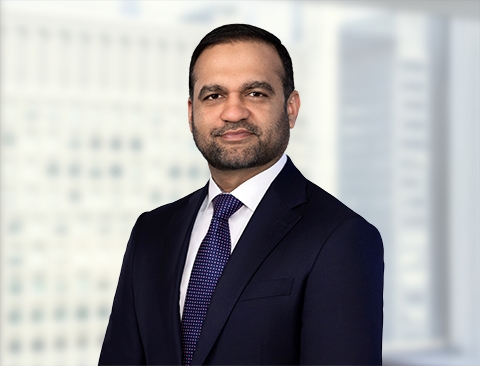
Junaid A. Zubairi
Shareholder
Chair, Government Investigations & White Collar Defense Group
Member, Board of Directors
Chicago